

Introduction
As global trade expands and the smart home market continues to grow, more brands, distributors, and procurement teams are turning to China to source intelligent security products — from Wi-Fi security cameras and smart doorbells to baby monitors and smart pet devices.
China has become one of the world’s leading manufacturing hubs for these categories, offering mature supply chains, strong R&D capability, and fast time-to-market. But successful sourcing depends on more than technology, design, and cost. For smart security products, compliance is just as critical to getting a product to market — and keeping it there.
Products that fail to meet local certification requirements can face:
• Customs clearance delays
• Additional testing costs
• Product recalls
• Sales restrictions
• Delayed market launches
Understanding compliance requirements before placing an order is one of the most effective ways for buyers to reduce risk and protect their launch timeline.
This guide covers:
• Key certifications required in major markets
• How compliance requirements differ by product category
• Quality factors that matter beyond mandatory certification
• How to choose a manufacturing partner that reduces — not adds to — your compliance risk

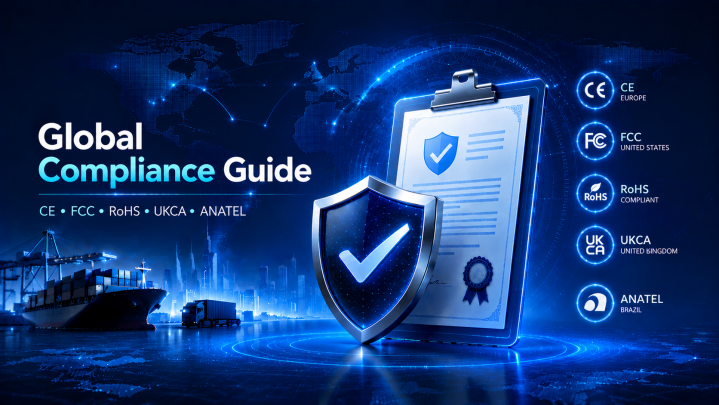
1. Understanding Compliance Requirements Across Markets
Every country and region has its own regulations governing electronics, wireless communication, safety, and environmental protection. Identifying the right certifications early in product development — rather than after production — is the single best way to avoid costly surprises at customs or on the shelf.
United States: FCC Compliance for Wireless Products
For smart security products entering the US, FCC certification is one of the most important requirements — particularly for products with wireless functions such as Wi-Fi security cameras, smart wireless doorbells, wireless baby monitors, and Bluetooth devices.
FCC compliance mainly addresses two areas:
• Electromagnetic Compatibility (EMC): ensuring a device doesn’t cause harmful interference with other electronics.
• Radio Frequency (RF) requirements: ensuring wireless products operate within approved frequency ranges.
Any product using Wi-Fi, Bluetooth, or similar wireless technology must undergo relevant FCC certification or authorization before it can enter the US market.
European Union: CE & RoHS Core Certifications
The EU has one of the most comprehensive compliance frameworks in the world. For smart security products, the requirements buyers most commonly encounter are:
CE Certification
CE certification demonstrates compliance with the European Union's health, safety, and environmental protection requirements, serving as a fundamental prerequisite for market access in the EU. For smart security products, the key CE directives include:
· CE RED (Radio Equipment Directive)
Applies to Wi-Fi cameras, Bluetooth-enabled devices, wireless video doorbells, and other smart security products with wireless communication or RF functionality.
· CE LVD (Low Voltage Directive)
Applies to electrical equipment operating within AC 50–1000 V or DC 75–1500 V, ensuring electrical safety and protection against electric shock and fire hazards.
· CE EMC (Electromagnetic Compatibility Directive)
Ensures security devices operate reliably without generating excessive electromagnetic interference (EMI) or being adversely affected by external electromagnetic disturbances.
RoHS Compliance
RoHS restricts the use of hazardous substances such as lead (Pb), mercury (Hg), and cadmium (Cd) in electronic components, including PCBs, electronic parts, plastic materials, and metal components. Compliance helps protect both consumers and the environment while meeting EU environmental requirements.
United Kingdom: UKCA and CE
Since Brexit, the UK has introduced its own UKCA marking for many product categories. Buyers and suppliers should confirm, for each specific product, whether UKCA is required, or whether CE compliance still applies under current transition rules. The right approach depends on the product category and the regulations in force at the time of import.
Japan: Strict Safety and Wireless Requirements
Japan applies rigorous standards to electronic and wireless devices. Depending on product function, manufacturers may need:
• TELEC certification — for wireless communication products such as Wi-Fi cameras, wireless doorbells, and smart home devices.
• PSE certification — for certain electrical products and power-related components.
Japanese buyers also tend to place heavy emphasis on product safety, component quality, and manufacturing consistency, not just certification paperwork.
Latin America: Country-Specific Requirements
Unlike the EU, Latin America has no single, unified certification system; requirements vary by country.
• Brazil: wireless products generally require ANATEL certification (Wi-Fi, Bluetooth, and other wireless communication products).
• Mexico: certain electronic products require NOM certification, covering electrical safety and product standards.
For other Latin American markets, requirements should be confirmed against local regulations for the specific product category.
2. Different Products, Different Compliance Priorities
Not every smart security product needs the same certifications. What’s required depends on the product’s structure, power source, wireless technology, and intended use environment.
Wireless Security Products
(Smart security devices that use Wi-Fi, Bluetooth, 4G/5G wireless communication, and so on.)
Main concerns: wireless certification (FCC/CE-RED/TELEC/ANATEL), EMC testing, and — increasingly — data security requirements, as more markets scrutinize how connected devices handle user data and cloud services.
Wired Security Products
(PoE cameras, Ethernet-based monitoring systems)
Main concerns: electrical safety, EMC compliance, and power supply requirements. No wireless certification is required, but long-term reliability still matters.
Outdoor Security Products
For outdoor products, compliance isn’t the whole story; durability matters just as much. IP rating indicates a product’s resistance to dust and water ingress. It isn’t a market-access certification, but it’s a critical indicator of how a product will hold up in real-world conditions. Products intended for gardens, farms, or commercial outdoor areas generally need a higher IP rating than indoor devices.
3. Certifications Matter — But Supplier Experience Matters More
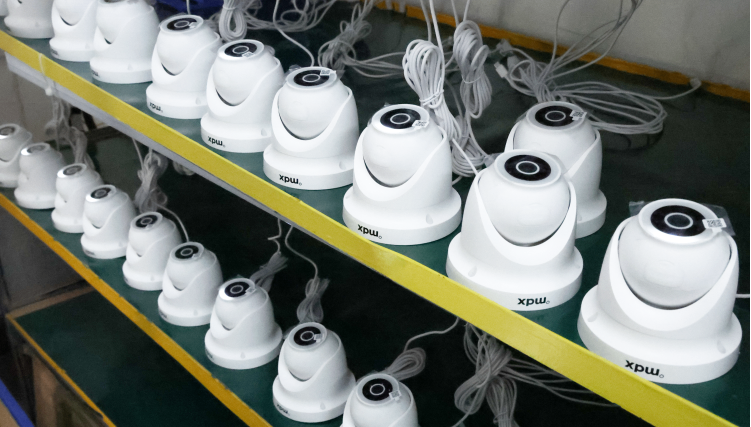
Holding the right certification documents is only the first step. In practice, an experienced supplier reduces risk in ways that paperwork alone can’t:
• Market knowledge — understanding regional regulatory differences, certification processes, and common customs issues before they become problems.
• Complete documentation — test reports, certification files, product specifications, material information, and quality inspection records, ready when buyers need them.
• Consistent mass-production quality — through strong production control, reliability testing, component management, and inspection systems, because compliance on paper means little if quality drifts during scale-up.
Conclusion: Build Compliance Into Your Sourcing Strategy From Day One
For global brands sourcing smart security products from China, compliance shouldn’t be a final check before shipment; it should be part of the plan from day one. That means factoring in target-market requirements, product category, wireless functions, safety standards, and supplier manufacturing capability from the earliest stages of development.
Choosing an experienced manufacturing partner helps reduce compliance risk, avoid unnecessary delays, and get products to market faster.
At Golden Vision, with 20 years industry experience, we support global partners with integrated capabilities across product development, manufacturing, quality control, safety certification and compliance preparation, so customers can focus on growing their markets while we help manage the complexity of sourcing and international delivery.
Contact us, Get Your Customized OEM/ODM Security Solution Instantly.
FAQ
1. What certifications are required for security cameras?
It depends on the target market and product functions. Common certifications include FCC (US), CE/RoHS (Europe), UKCA (UK), TELEC (Japan), ANATEL (Brazil) and so on.
2. Does CE Certification Apply to Smart Security Cameras in the U.S.?
No. CE certification applies to the EU market and does not replace U.S. regulatory requirements. Smart security cameras sold in the United States must meet applicable FCC requirements.
3. Is IP65 a certification?
No. IP65 is an international protection rating that indicates resistance to dust and water — a measure of durability, not market-access compliance.
4. Why should buyers work with experienced ODM manufacturers?
Experienced manufacturers help with certification preparation, product customization, quality control, production management, and export documentation, reducing risk throughout the sourcing process.
Related Reading
Smart Security Camera OEM/ODM Guide: How to Choose the Right Manufacturer in 2026?
Night Vision Decoded: IR vs. Standard Full-Color vs. Starlight Full-Color
Why Window Cameras Are Becoming a Smarter Security Solution in 2026
Why Are Smart Pet Products Designed This Way? | OEM/ODM Design Insights
What Does It Take to Prepare a Smart Security Camera for Global Markets?