

Late shifts, long commutes, and business trips can make it hard to feed pets on a regular schedule. Some cats and dogs eat everything in their bowl at once, while others do better with smaller meals throughout the day. Filling the bowl before leaving home can also leave kibble sitting out for hours, where it may lose its crunch, especially in humid weather.
A smart pet feeder can dispense preset portions on a schedule and let owners manage feedings remotely. For brands and retailers sourcing these products, the right configuration depends on who will use it, what their pets eat, and what features make sense for the sales channel and target price.
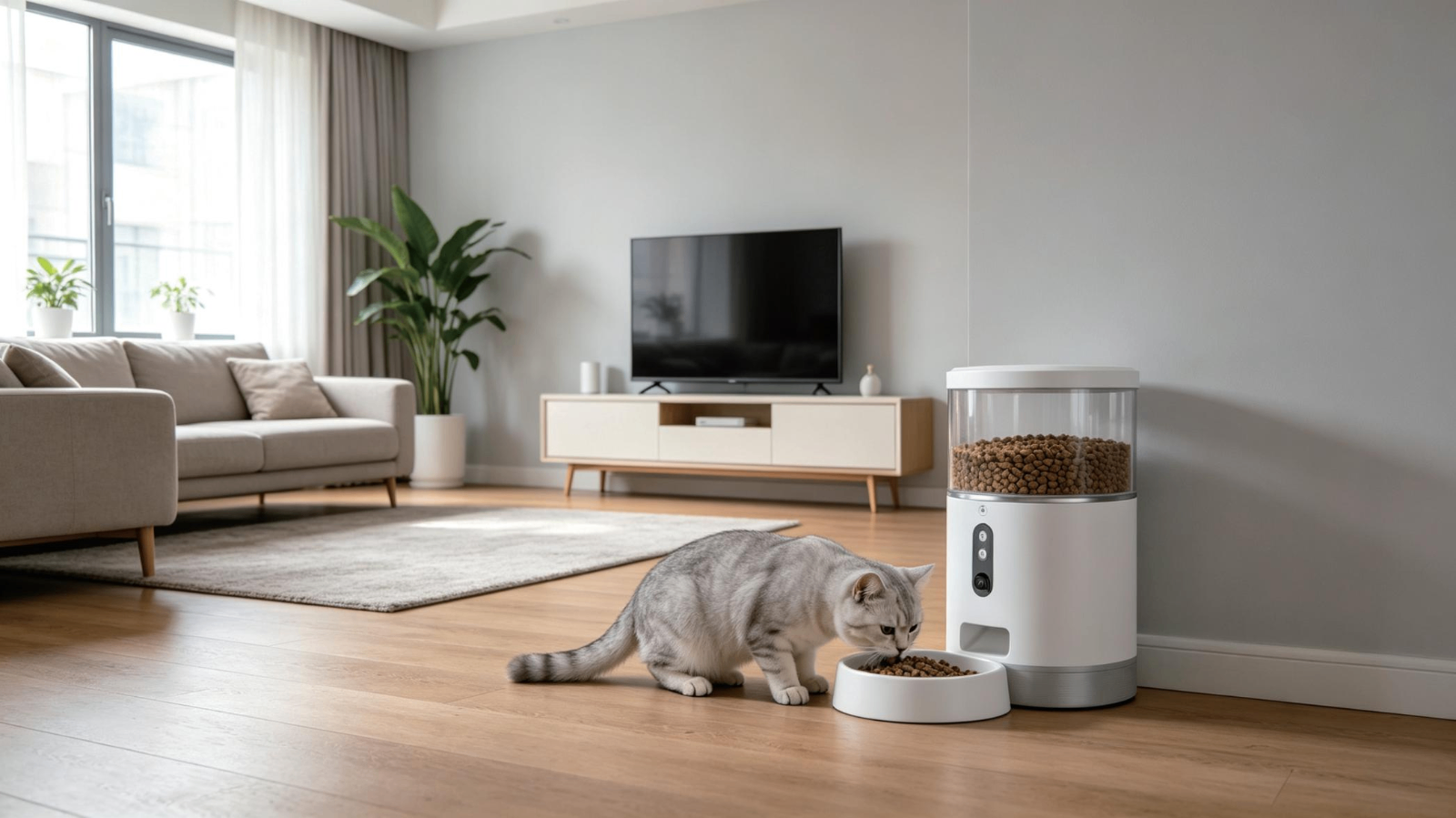
Match the Feeder to the Household
Single or dual hoppers. A single hopper works well for households that use one type of kibble. A dual-hopper feeder can hold two foods separately. Check which foods each hopper supports and whether the two can be controlled independently.
One bowl or two. A single bowl suits many one-pet households. A dual-bowl model gives two pets separate places to eat. Check the bowl height and spacing, as well as how the feeder divides food between the bowls.
Pet size and food type. Bowl height and access matter when choosing a model for cats, small dogs, or larger dogs. Some feeders handle standard dry kibble only. If customers use freeze-dried pieces or mix them with kibble, test how the intended food combination dispenses before selecting a model.
Five Checks for Everyday Reliability
1. Kibble jams. The size and shape of the kibble, the buildup of crumbs, and the shape of the chute can all affect dispensing. Check the supported kibble sizes and run repeated dispensing tests with foods common in your target market. Ask how the feeder detects a jam, whether it can reverse to clear a blockage, and how it alerts the owner.
2. Cleaning and reassembly. Crumbs and oils can collect at the bottom of the hopper, inside the chute, and around moving parts. Check whether these areas are easy to reach and which parts can be washed. Removable parts should be easy to dry fully and reassemble, and the instructions should explain how to clean the electronic base.
3. Power and Wi-Fi outages. If the feeder stores and runs its schedule locally, it can dispense scheduled meals when Wi-Fi drops, provided it still has power. During a power outage, backup batteries can keep dispensing available on models designed for it. Check which features work on battery power, including Wi-Fi, the camera, and alerts. Test whether the unit reconnects and resumes its saved schedule when service returns.
4. Kibble freshness. A larger hopper can reduce refills, but how much food to add depends on how quickly the pet eats it, the food’s storage instructions, and the humidity in the home. Store dry food in a cool, dry place. Assess how well the lid and outlet seal, whether a desiccant pack is used and easy to replace, and how easily the hopper can be cleaned and dried.
5. Checking when to refill. A clear hopper makes it easy to check the food level at a glance. Opaque models can use a viewing window or a sensor that sends a low-food alert. Test how soon the alert appears with different kibble types and whether the sensor is easy to clean.
App Controls and Camera Features
An app can let owners adjust schedules, dispense an extra portion, and review feeding history. Alerts for low food, jams, or low battery can flag issues that need attention. Confirm what triggers each alert and whether an internet connection is required.
A built-in camera lets owners check on their pets, see what is in the bowl, and watch mealtimes remotely. Some models add night vision and two-way audio so owners can see their pets in low light and talk to them remotely. When testing a camera feeder, check whether the bowl is in frame, whether the pet blocks the view while eating, and how well the image holds up in low light. Product descriptions should distinguish a record of food dispensed, a view of the meal, and a measurement of how much the pet ate.
Smart Pet Feeders from Golden Vision
The Golden Vision BL4A combines a 4-liter hopper with scheduled feeding, remote controls, and a built-in camera. The range also includes models with two stainless steel bowls and models with an opaque hopper and low-food alerts. These options give brands room to build a lineup for different households, retail channels, and price points.
Planning a smart pet feeder lineup? Contact Golden Vision for product specifications and to discuss kibble compatibility, feature options, and OEM/ODM development.